
What operators must do now after API Storage Tank Conference (Oct 20–22, 2026): a 5-step asset-integrity playbook
API Storage Tank Conference is the focus of this MSS technical news article. The API Storage Tank Conference (Oct 20–22, 2026) brought together sessions on API standards, inspection and NDE, digital transformation and risk‑based inspection (RBI), producing a concentrated view of practices operators must adopt to maintain asset integrity.
The conference emphasised staying ahead of evolving standards, regulations and emerging technologies, and the programme lists practical subject matter for teams planning SLM or digital twin pilots.
This article uses the conference programme as the factual basis to explain why the outcomes matter across the asset lifecycle, where engineering decisions should be recorded and what practical actions operators should take to keep responsibilities, actions and evidence visible.
API Storage Tank Conference: Latest Evidence and Technical Context
The conference ran from Oct 20–22, 2026 and the programme assembled courses and sessions covering core topics for tank operators: API standards discussion panels, inspection and NDE techniques, digital transformation, and data‑driven RBI.
That line‑up reflects a recognisable shift from single‑discipline interventions towards integrated lifecycle approaches: inspection data, the engineering record and risk models are now being treated as parts of a single evidence chain rather than discrete outputs.
For organisations that manage aboveground storage tanks, the sessions provide a clear technical context for near‑term activity: standard updates and standards‑track discussions inform what to watch for in API revisions; inspection and NDE presentations highlight maturing techniques operators should trial; and digital twin and SLM sessions point to concrete pilots that can reduce uncertainty in fitness‑for‑service decisions.
Taken together, the programme establishes which areas of practice are likely to require attention in current operating plans and where engineering teams should allocate time and budget to maintain compliance and safety. The original evidence can be reviewed in American Petroleum Institute (API) — 2026 API Storage Tank Conference & Expo — program and sessions.
Why API Storage Tank Conference Matters Across the Lifecycle
Aboveground storage tanks remain among the highest‑risk stationary assets on many sites. Lessons from the conference translate directly into everyday decisions: defining inspection scopes, prioritising RBI activities, recording fitness‑for‑service outcomes and keeping P&IDs and control and electrical schematics current within management of change (MOC) processes.
For an operator, the practical question is not merely which technologies were shown but how those outputs should change review, approval and verification workflows.
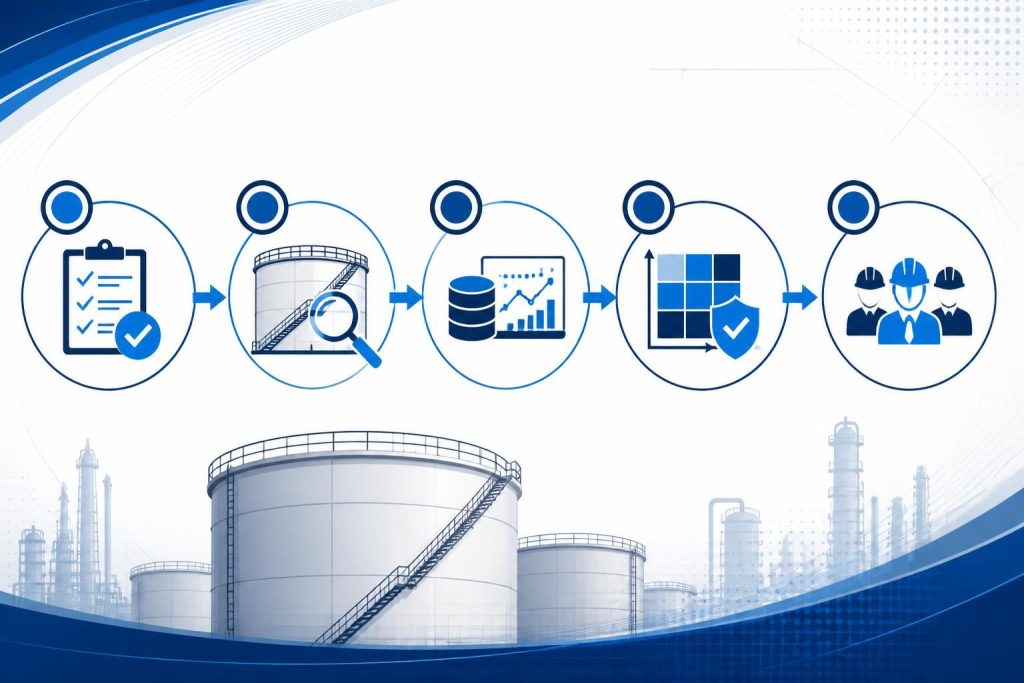
From a lifecycle perspective, the conference reinforced a five‑point operator playbook that teams can act on immediately: 1) data readiness — verify the completeness and provenance of inspection, thickness and process data so it can feed analytics; 2) digital twin pilot — scope a lightweight digital twin or SLM pilot that targets a high‑risk tank and defines measurable success criteria; 3) RBI rule changes to watch — track the standards‑track discussions and map likely API updates back to inspection frequencies and acceptance criteria; 4) inspection‑tech procurement checklist — require demonstrable NDE performance, integration capability and proof‑test traceability in contracts; and 5) tighten MOC evidence — mandate that any integrity decision references the source engineering data, named approvers and verification steps.
Implemented together, these actions move organisations from ad‑hoc compliance to an auditable, lifecycle‑aware approach. For related MSS guidance, see Printing Views and Reports, Capital Project Execution Case Study and View Templates.
Requirements and Practical Controls
Translating conference learning into operational controls means codifying who does what, when and on what evidence.
Inspection and RBI teams should start by mapping the sessions’ takeaways to their inspection scopes: identify which tanks need new NDE techniques or increased sampling density, and prepare procurement specifications that demand data tagging, proof‑test records and the ability to export measured data in standard formats.
Engineering teams must prioritise P&ID hygiene and ensure control and electrical documentation reflects recent MOC actions so that fitness‑for‑service decisions rest on current drawings. Practically, an operator‑level control package should state the decision being made, cite the source information used, identify the disciplines involved, list assumptions and name the owner with a due date.
Verification steps must confirm the intended result was achieved and remains effective during operation. When procuring inspection technology or service providers, avoid vendor promotion in specifications: require objective performance measures, interoperability and demonstrable integration with your data‑management systems.
Finally, keep regulators and duty holders informed as part of established reporting routes, and monitor the API standards process so that any required changes to inspection frequencies or acceptance criteria are captured promptly in the organisation’s compliance register.
How MSS Supports Better Lifecycle Information
Connecting the technical outcomes of the conference to everyday workflows depends on controlled lifecycle information: a single place where source evidence, decisions, actions and verification records can be linked and retrieved.
MSS workflows are designed to help organisations bring engineering information and lifecycle activities together so that accountable decisions remain visible without replacing specialist engineering judgement.
In practice, relevant workflows can attach the conference‑benchmarked inspection report or standards change note to an MOC, link that evidence to an approval record and open consequent actions for inspection teams with named owners and due dates.
That approach creates a clearer audit trail: reviewers can find the current basis for a decision, see what data supported it, who approved it and whether post‑implementation verification confirmed the result.
For operators moving from paper or siloed electronic systems to a lifecycle‑aware process, the immediate benefit is not automation for its own sake but improved traceability and reduced risk that a decision’s technical basis becomes disconnected from operations.


