

Non-Instrumented Systems
Managing Non-Instrumented Protection Layers
Document, manage, and monitor non-instrumented protection systems across the facility. Engineers can capture equipment, mechanical protection devices, and safeguards identified during hazard analysis while maintaining full visibility of their performance, ownership, and lifecycle status.
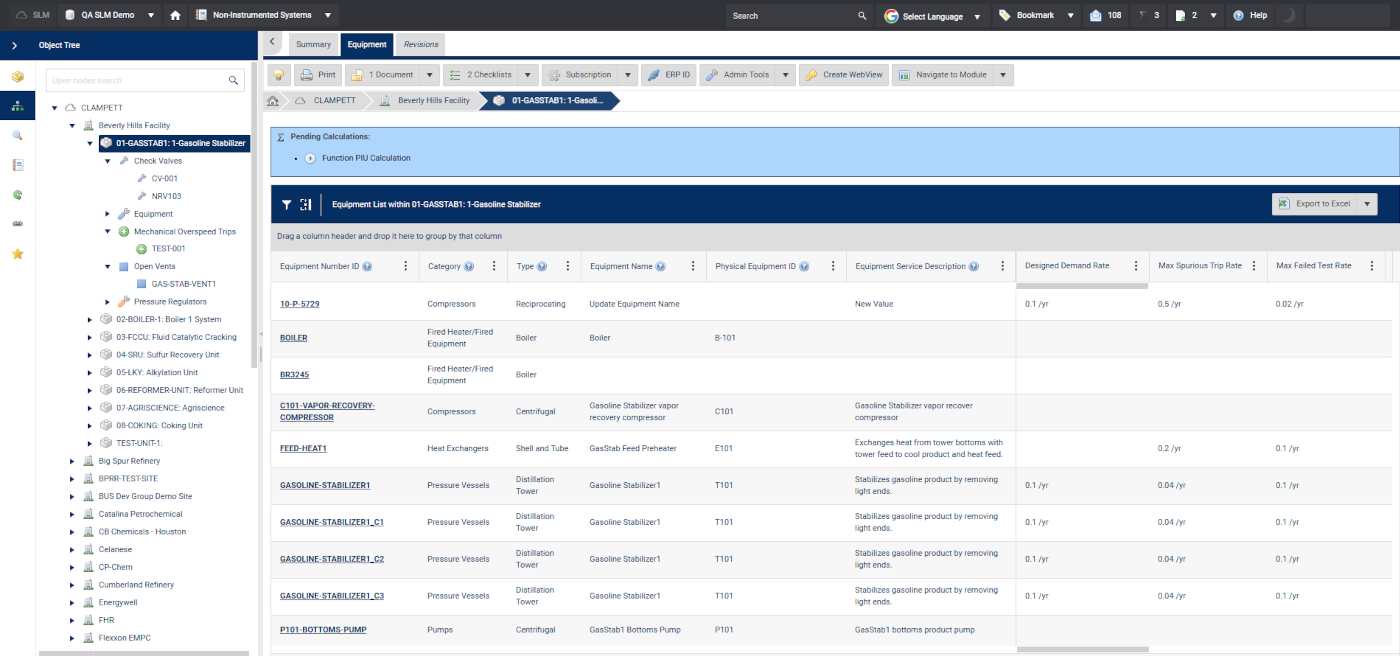
Facility-Wide Visibility of Non-Instrumented Protection Systems
Quickly view and manage all non-instrumented safeguards across the facility from a centralized object tree. Engineers can navigate equipment hierarchies, unit systems, and individual devices while maintaining full traceability of each protection layer.
Click to zoom image
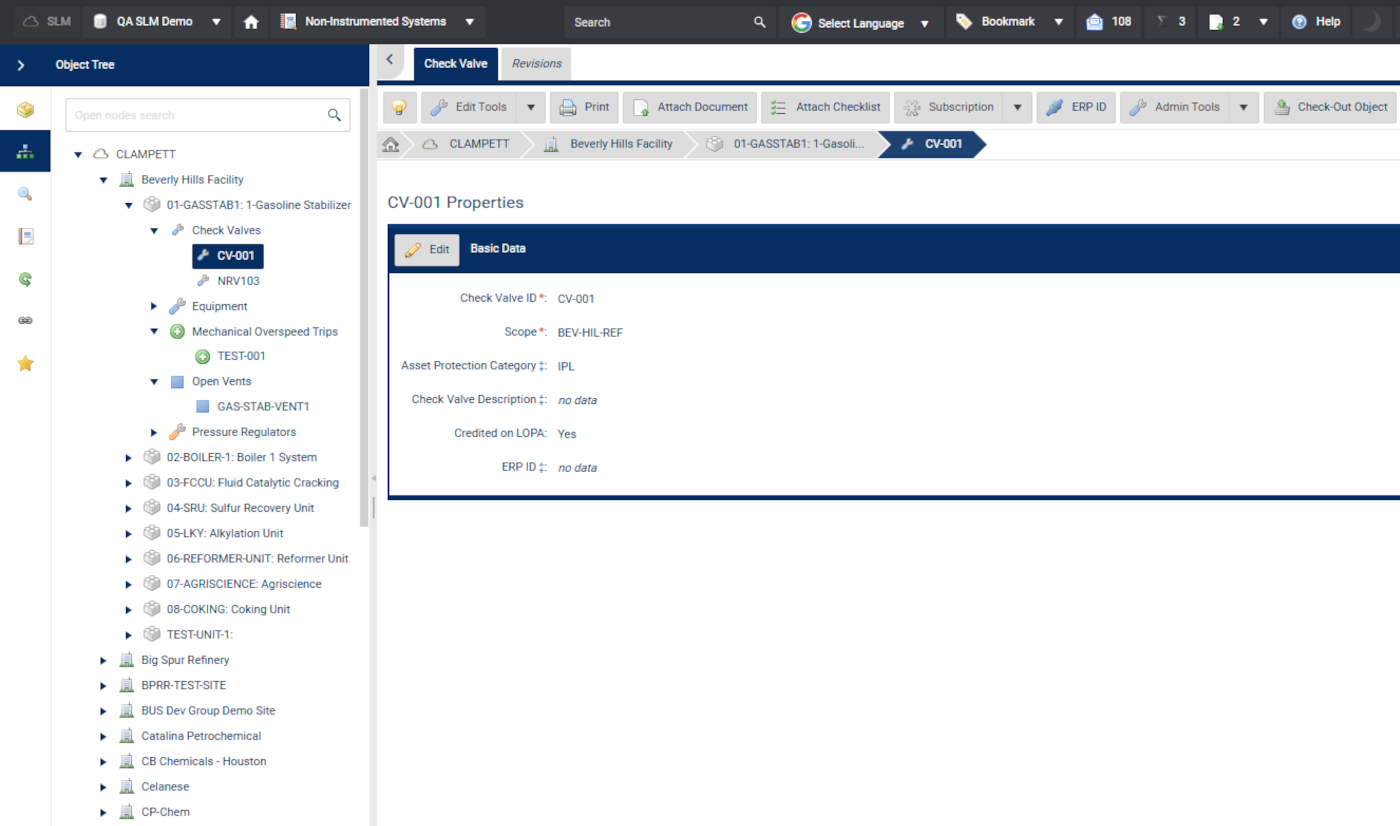
Detailed Asset Records for Mechanical Protection Devices
Each non-instrumented safeguard is managed through a detailed digital asset record. Engineers can capture essential information such as asset identifiers, protection category, scope, and system association while maintaining full traceability within the facility hierarchy.
Click to zoom image
Non-Instrumented Systems Standards & Best Practices
Non-instrumented systems play a vital role in reducing risk within hazardous processes by providing independent layers of protection that complement instrumented safeguards.
These safeguards can include relief systems, mechanical protections, and procedural controls that prevent or mitigate hazardous events.
Industry guidance such as CCPS and risk assessment methodologies like Layer of Protection Analysis (LOPA) highlight the importance of identifying, documenting, and maintaining these protection layers to ensure they remain effective over time.
Effective management of non-instrumented safeguards requires clear visibility of equipment, defined performance expectations, and ongoing monitoring.
Without a centralised approach, data can become fragmented, increasing the risk of gaps in protection and making audits more challenging.
By digitizing and connecting safeguard data within a single platform, organisations can improve traceability, support compliance efforts, and ensure that all protection layers are consistently managed throughout the safety lifecycle.
Additionally, maintaining accurate and up-to-date records of non-instrumented safeguards supports audit readiness and helps organisations demonstrate compliance with internal standards and regulatory expectations. A centralised approach ensures that changes are tracked, responsibilities are clear, and all stakeholders have access to reliable, consistent safety data.
BLOG & ARTICLES
Stories that Drive Innovation
Discover how our software solutions enable smarter decision-making, operational excellence, and compliance across the world’s most complex industrial environments.