
Diagnostic Coverage Explained
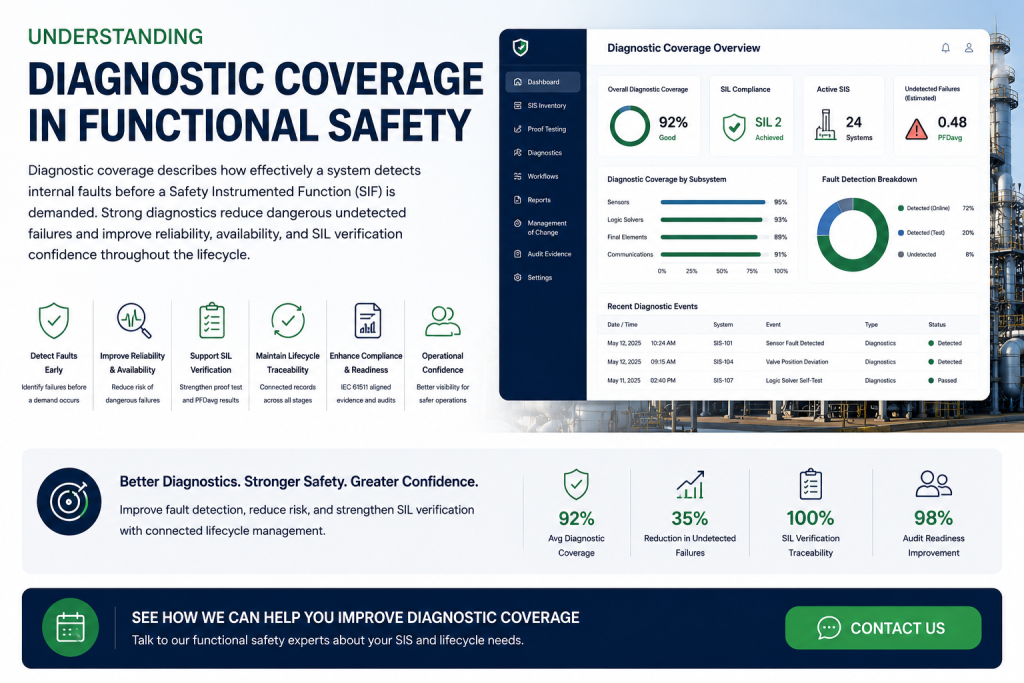
Diagnostic coverage describes how effectively a system can detect internal faults before they prevent a Safety Instrumented Function (SIF) from operating correctly when required.
Within functional safety lifecycle management, diagnostic coverage plays an important role in SIL verification because automatic fault detection can reduce the likelihood of dangerous undetected failures remaining hidden.
Higher diagnostic coverage may improve confidence in the reliability and availability of safety functions throughout the operational lifecycle.
Diagnostic capability may include:
- internal self-checking
- automatic fault detection
- controller diagnostics
- communication monitoring
- device health monitoring
- system redundancy checks
For broader lifecycle verification background, review our SIL Verification guide.
Understanding Diagnostic Coverage in Functional Safety
Diagnostic coverage helps organizations estimate how effectively faults can be detected before a demand occurs.
This is important because undetected failures may reduce the ability of the safety function to respond correctly during hazardous conditions.
A structured lifecycle approach helps organizations improve:
- verification confidence
- lifecycle traceability
- maintenance visibility
- reliability calculations
- testing consistency
- audit readiness
Maintaining connected lifecycle records helps engineering teams improve visibility across operational and verification activities.
Effective fault detection helps organizations identify hidden failures before they affect safety function performance. Learn more in our Understanding Dangerous Undetected Failures guide.
How Diagnostic Coverage Affects PFDavg Calculations
Diagnostic coverage directly influences PFDavg calculations because detected failures can often be repaired before they create dangerous operational conditions.
Engineering teams commonly review:
- automatic fault detection assumptions
- proof testing intervals
- device reliability data
- repair expectations
- system redundancy
- maintenance procedures
Maintaining reliable lifecycle records helps organizations improve consistency between diagnostic assumptions and reliability calculations.
For more reliability calculation background, review our PFDavg guide.
Diagnostic Coverage and SIL Verification
Diagnostic coverage assumptions are commonly included within SIL verification because fault detection capability directly affects overall safety function performance.
Organizations often review:
- device diagnostics
- logic solver monitoring
- sensor fault detection
- final element diagnostics
- common cause considerations
- maintenance response procedures
Maintaining connected lifecycle workflows helps organizations improve traceability between verification assumptions, operational testing, and lifecycle records.
For more lifecycle architecture background, review our Logic Solvers in Functional Safety Explained guide.
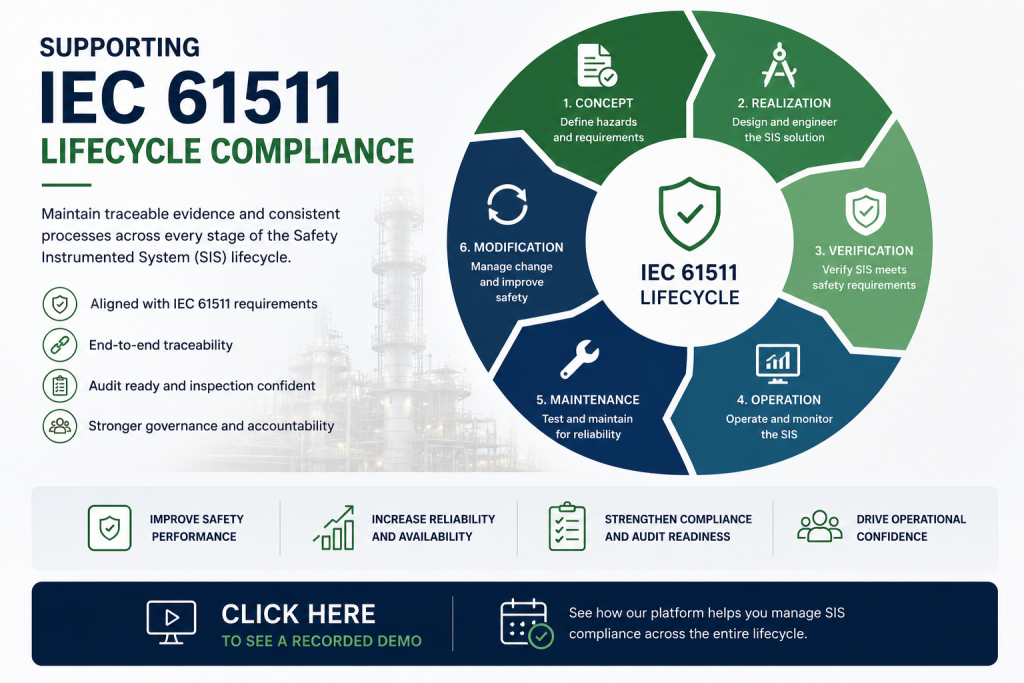
Supporting IEC 61511 Lifecycle Compliance
IEC 61511 requires organizations to maintain evidence supporting the reliability and lifecycle management of safety instrumented systems.
Structured lifecycle records help organizations improve:
- verification traceability
- engineering accountability
- testing consistency
- audit readiness
- operational governance
- compliance visibility
For official standards information, visit the IEC Functional Safety overview.
Connecting Diagnostics to Proof Testing Activities
Diagnostic coverage is closely connected to proof testing because automatic fault detection and scheduled testing activities work together to reduce hidden failures.
Organizations commonly review:
- proof testing procedures
- automatic fault monitoring
- maintenance response activities
- testing documentation
- repair records
- device diagnostics
Connected lifecycle workflows help teams improve traceability between maintenance activities and operational safety performance.
For more lifecycle testing background, review our Proof Testing guide.
Common Sources of Diagnostic Capability
Different devices and architectures may provide different levels of diagnostic capability throughout the safety lifecycle.
Examples may include:
- logic solver self-monitoring
- sensor fault detection
- partial stroke testing
- redundant processing architectures
- automatic communication monitoring
- smart field device diagnostics
Organizations commonly review these assumptions during lifecycle verification and engineering assessments.
Managing Reliability Records More Effectively
Many organizations still manage diagnostic assumptions using spreadsheets, disconnected engineering systems, and manual maintenance records.
This can create challenges such as:
- duplicate lifecycle records
- manual audit preparation
- limited cross-team visibility
- version control issues
- poor traceability between lifecycle stages
- inconsistent documentation management
As lifecycle complexity grows, maintaining reliable diagnostic records manually can become increasingly difficult.
Improving Diagnostic Traceability with Structured Software
Structured lifecycle management platforms can help organizations centralize verification assumptions, maintenance records, testing evidence, and lifecycle approvals within one connected environment.
This may improve:
- engineering visibility
- workflow consistency
- audit readiness
- cross-discipline collaboration
- document traceability
- compliance reporting
For broader lifecycle workflow context, explore our Functional Safety Management Software guide.
Linking Diagnostic Coverage to Safety Requirements
Diagnostic assumptions should remain aligned with lifecycle requirements throughout engineering, testing, maintenance, and operational activities.
Organizations commonly review:
- SRS documentation
- SIL targets
- testing assumptions
- maintenance procedures
- device architecture
- operational requirements
For additional lifecycle requirements background, review our Safety Requirements Specification (SRS) guide.
Supporting Long-Term Functional Safety Reliability
Diagnostic coverage remains part of the ongoing functional safety lifecycle because operating conditions, maintenance strategies, and testing assumptions may evolve over time.
Organizations commonly review lifecycle information during:
- management of change activities
- equipment replacement projects
- verification reviews
- testing strategy updates
- compliance audits
- operational improvements
Maintaining connected lifecycle records helps organizations improve long-term reliability, lifecycle governance, and operational safety management across functional safety activities.


