

Instrumented Systems
Control Your Safety Instrumented Systems with Confidence
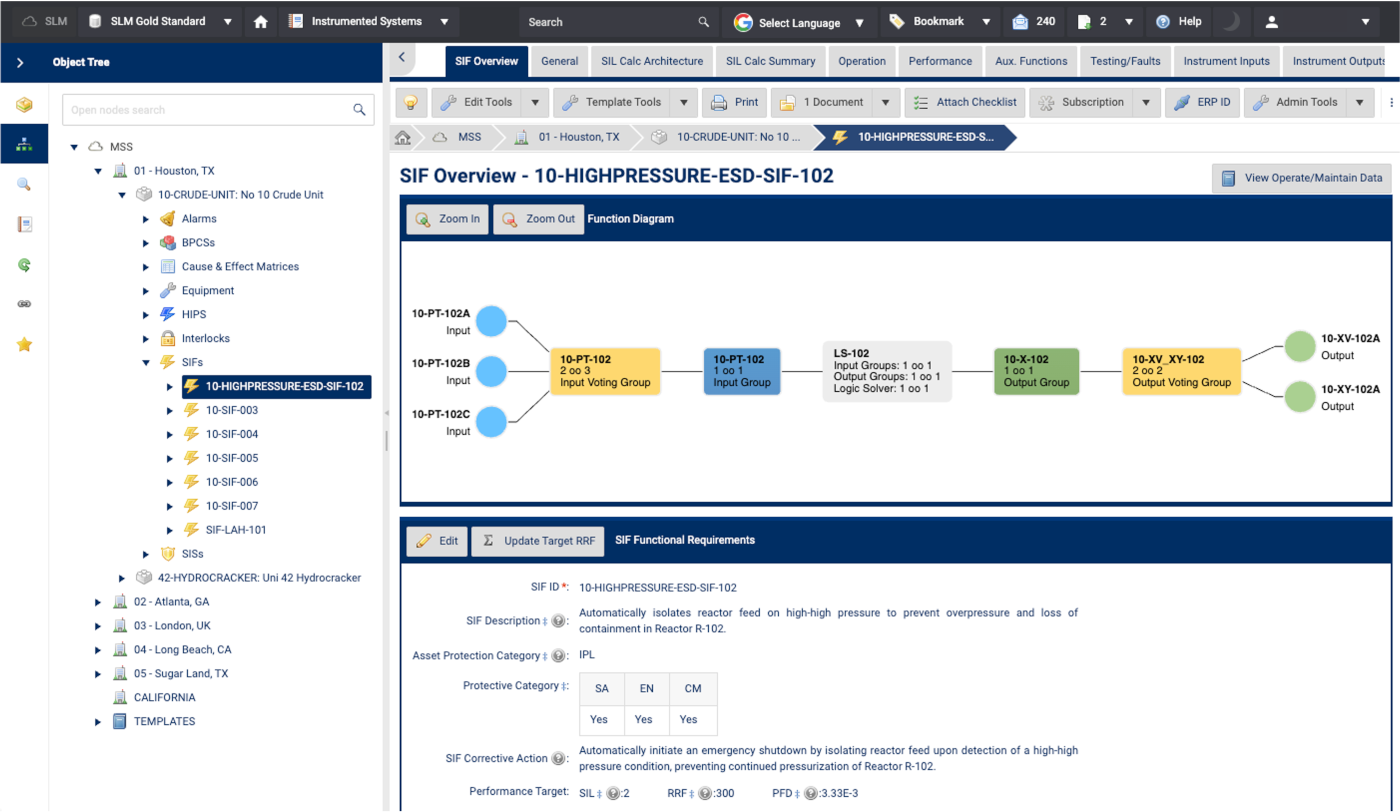
Build and Control Your Full Protection Layer Architecture
Design, structure, and manage every protection layer in a centralized, traceable environment.
Model complete Safety Instrumented Functions alongside other Independent Protection Layers — including Alarms, BPCS safeguards, Fire & Gas systems, and Interlocks — with full architectural visibility and Safety Requirement Specification Documentation.
Click to zoom image
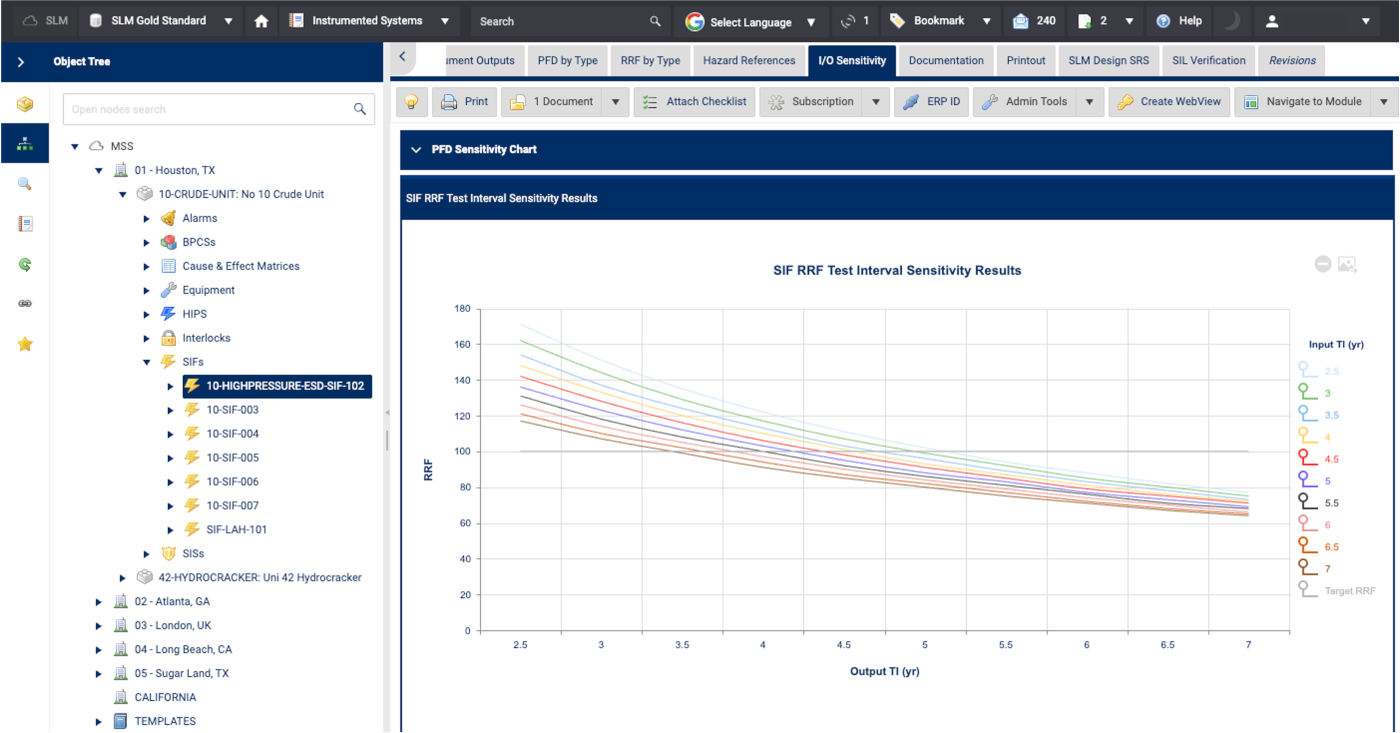
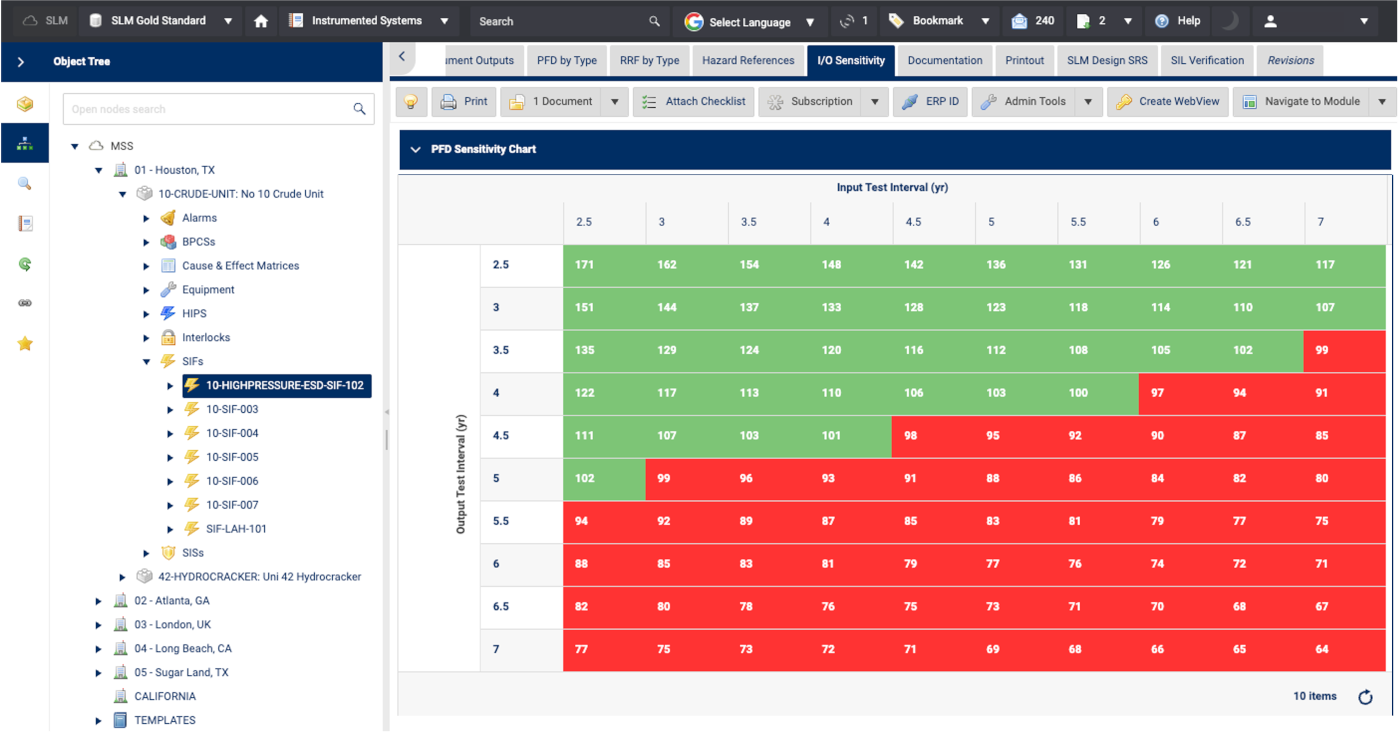
Proof Test Interval Optimization & Risk Insight
Reduce unnecessary maintenance while protecting safety margins. By modeling the real impact of proof testing frequency, you gain visibility into where you are over-maintaining, under-maintaining, or operating at unnecessary risk.
Click to zoom image
Click to zoom image
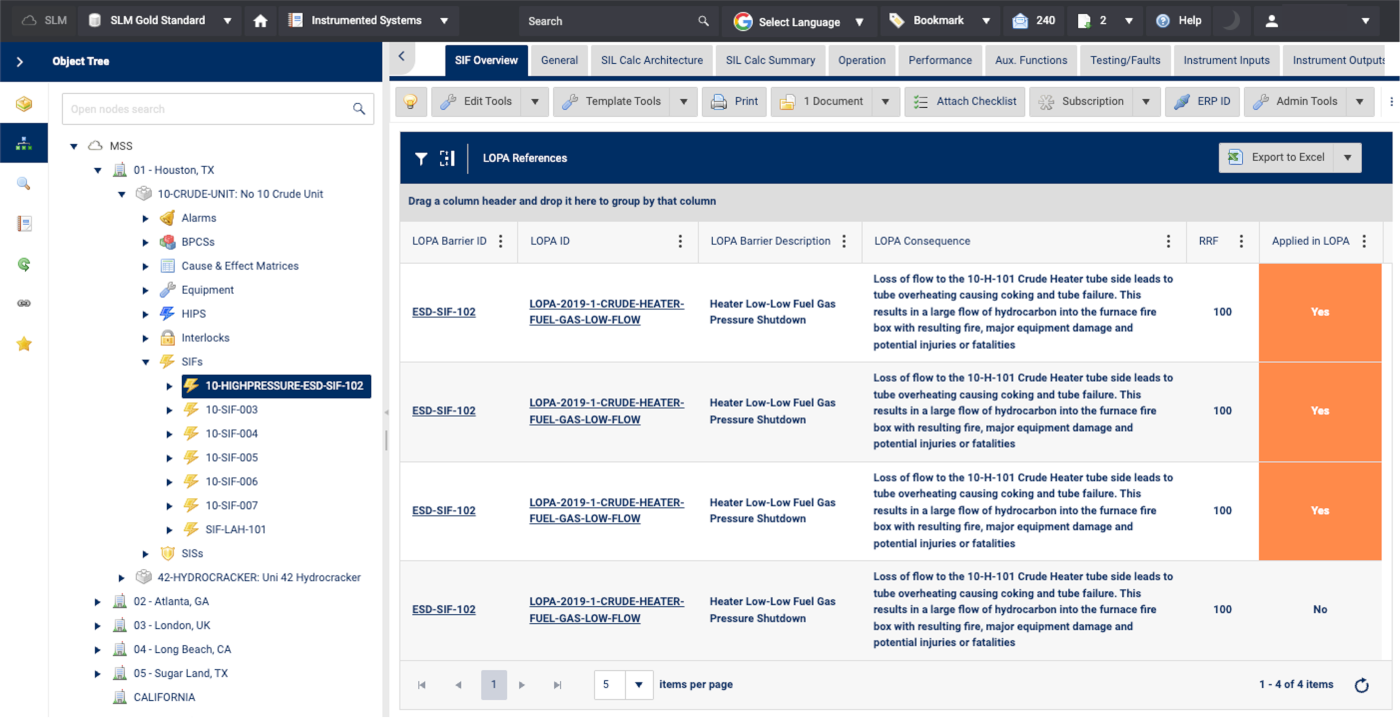
Direct LOPA Integration & Process Safety Continuity
Reduce friction between analysis and execution.
By linking LOPA barriers directly to the Safety Instrumented System’s architecture, you remove duplicated effort and create a single, defensible source of truth.
Click to zoom image
Safety Instrumented Systems Standards & Compliance
These standards ensure that SIS are designed with appropriate Safety Integrity Levels (SIL) and that performance is maintained throughout the operational lifecycle. Industry guidance from organisations such as the Center for Chemical Process Safety (CCPS) supports best practices for risk reduction and the integration of SIS within broader process safety frameworks.
In addition, regulatory frameworks such as OSHA Process Safety Management (PSM) require organisations to demonstrate that safety systems are properly designed, documented, and maintained to prevent hazardous incidents.
By digitising safety instrumented system data within a centralised platform, organisations can ensure compliance, improve auditability, and maintain full visibility of system performance across the entire lifecycle.
BLOG & ARTICLES
Stories that Drive Innovation
Discover how our software solutions enable smarter decision-making, operational excellence, and compliance across the world’s most complex industrial environments.