SIL Validation Explained
SIL validation is the process of confirming that a Safety Instrumented Function (SIF) performs as intended under real operating conditions and meets the requirements defined during the safety lifecycle.
Within IEC 61511, SIL validation is a critical activity because it provides evidence that the installed system delivers the required risk reduction before it is placed into service.
SIL validation activities may include:
- functional testing
- cause and effect verification
- field device testing
- shutdown testing
- alarm verification
- operational readiness checks
For broader lifecycle verification background, review our SIL Verification guide.
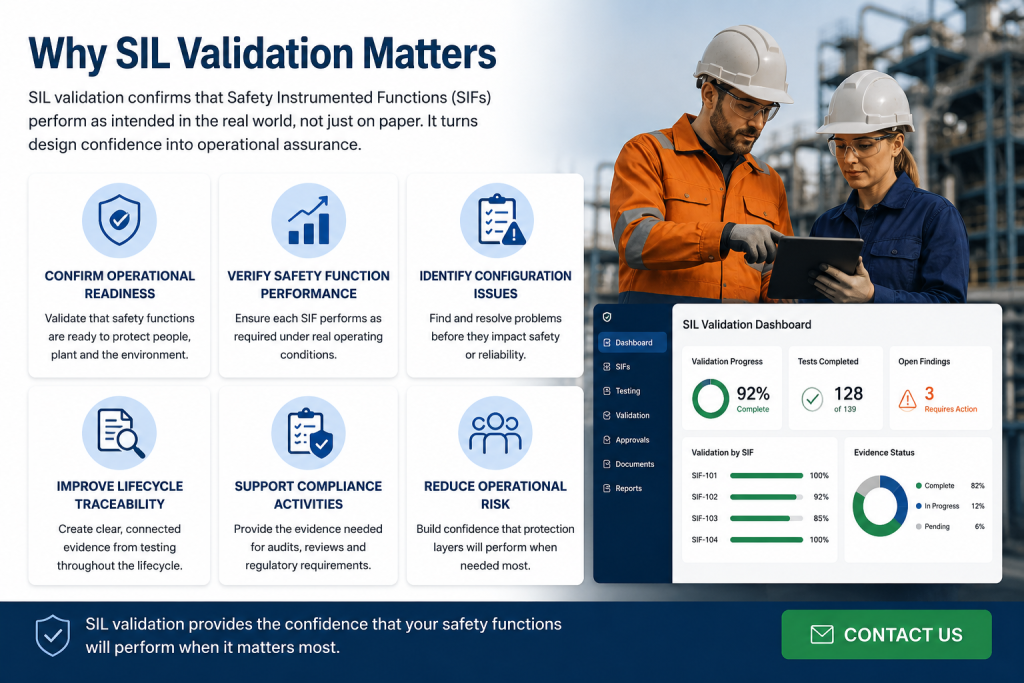
Why SIL Validation Matters
Verification calculations demonstrate that a design should achieve the required Safety Integrity Level, but validation confirms that the implemented system actually performs correctly in practice.
SIL validation helps organizations:
- confirm operational readiness
- verify safety function performance
- identify configuration issues
- improve lifecycle traceability
- support compliance activities
- reduce operational risk
Successful validation provides confidence that the installed protection layers behave as expected when hazardous conditions occur.
SIL Verification vs SIL Validation
SIL verification and SIL validation are closely related but serve different purposes within the safety lifecycle.
Verification focuses on demonstrating that the design meets the required SIL target through engineering calculations and reliability analysis.
Validation focuses on demonstrating that the completed installation performs correctly under operational conditions.
Organizations commonly perform both activities to maintain confidence in safety function performance throughout the lifecycle.
For additional background, review our SIL Verification guide.
Confirming Safety Function Performance
Validation activities often focus on confirming that every part of the Safety Instrumented Function operates correctly.
This may include testing:
- sensors
- logic solvers
- final elements
- alarm responses
- operator interfaces
- shutdown sequences
Structured testing procedures help organizations maintain consistency and traceability throughout the validation process.
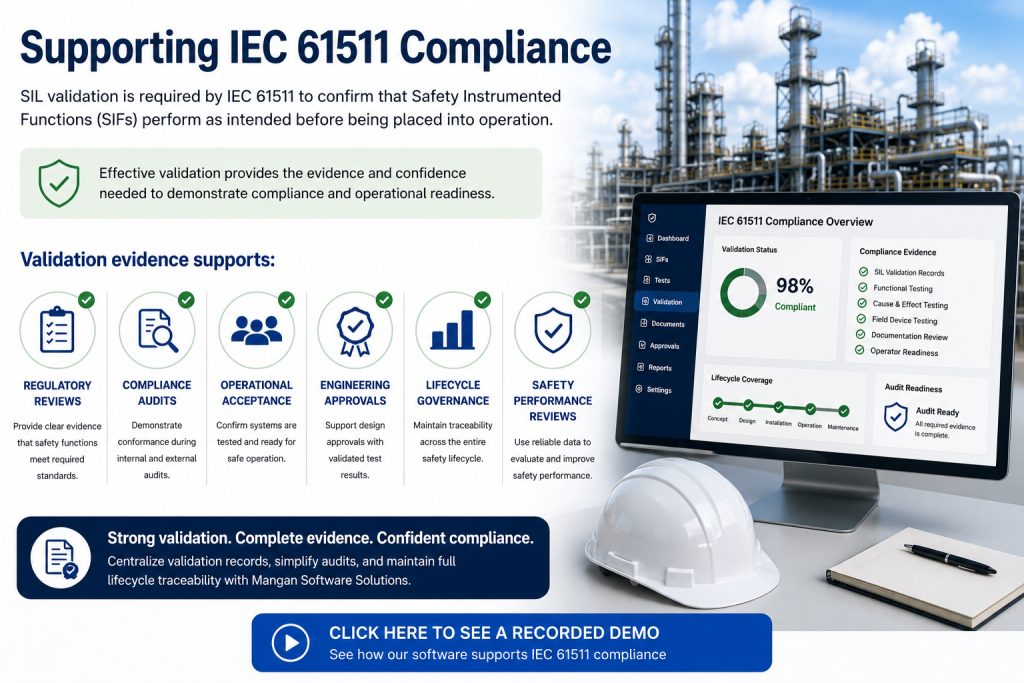
Supporting IEC 61511 Compliance
IEC 61511 requires organizations to perform validation activities before placing Safety Instrumented Functions into operation.
Validation records may provide evidence for:
- regulatory reviews
- compliance audits
- operational acceptance
- engineering approvals
- lifecycle governance
- safety performance reviews
For official standards information, visit the IEC website.
Typical SIL Validation Activities
Organizations commonly perform a range of activities to demonstrate that safety functions operate correctly.
Examples may include:
- cause and effect testing
- shutdown verification
- field device checks
- alarm testing
- interlock validation
- documentation reviews
These activities help identify issues before systems are placed into operational service.
Managing Validation Evidence Effectively
Validation generates large volumes of documentation, approvals, testing records, and evidence.
Many organizations still manage this information using spreadsheets, disconnected files, and manual document control processes.
This can create challenges such as:
- duplicate records
- manual audit preparation
- limited visibility across teams
- version control issues
- poor lifecycle traceability
- inconsistent documentation management
As projects become more complex, maintaining validation evidence manually can become increasingly difficult.
Improving Traceability Throughout the Lifecycle
Structured lifecycle management software can help organizations centralize validation records, testing evidence, approvals, and engineering documentation within a connected environment.
This may improve:
- engineering visibility
- workflow consistency
- audit readiness
- cross-discipline collaboration
- document traceability
- compliance reporting
For broader lifecycle workflow context, explore our Functional Safety Management Software guide.
Linking Validation to the Safety Requirements Specification
Validation activities should demonstrate that the installed system satisfies the requirements defined within the Safety Requirements Specification (SRS).
Organizations commonly review:
- SIL targets
- functional requirements
- testing procedures
- cause and effect documentation
- operational requirements
- acceptance criteria
For additional lifecycle requirements background, review our Safety Requirements Specification (SRS) guide.
Validation as an Ongoing Lifecycle Activity
Although formal validation is commonly associated with project delivery, validation-related activities may continue throughout the operational lifecycle.
Organizations commonly revisit validation assumptions during:
- management of change activities
- system upgrades
- equipment replacement projects
- major shutdowns
- compliance reviews
- continuous improvement initiatives
Maintaining connected lifecycle records helps organizations improve long-term reliability, governance, and operational safety management across functional safety activities.


